
Plasma spraying
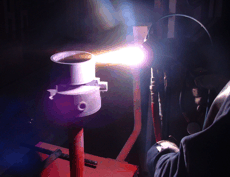
Plasma spraying is a thermal spray process in which a coating material in powder form is melted in an extremely hot plasma flame and applied to a surface at high speed.
Due to the very high temperature, this process is particularly suitable for materials with a high melting point, such as ceramics and cermets.
How Does the Process Work?
The plasma is generated by an electric arc between a positive anode and a negative cathode inside the spray gun. This arc ionizes a gas stream (usually argon or an argon/hydrogen mixture) into plasma.
- The arc heats the gas to temperatures of ~20,000 °C
The plasma jet emerging from the nozzle remains at 10,000 °C a few centimeters away. - The coating material is injected in powder form into this flame.
- The molten particles are propelled onto the workpiece at speeds up to 450 m/s.
- There they solidify and form a wear-resistant, homogeneous layer.

Advantages
Application of ceramic coatings with high hardness
No heating or deformation of the workpiece
Ideal for thermal or electrical insulating layers
Very fine control over layer thickness and porosity


Capabilities at Plasmajet
- Parts up to Ø 2500 mm, 10 m in length, and 10 tons
- Complete pre- and post-treatment (blasting, grinding, finishing)
Typical applications
- Sealing surfaces or sliding surfaces in pumps
- Wear-resistant zones on industrial shafts
- Thermal insulating layers in aerospace or energy
- Electrically insulating coatings on metal substrates
Need advice?
We are happy to assist you in choosing the right coating material for your application.


